AOCCWiki
The American Orthodox Catholic Church (AOCC)
Overview
The American Orthodox Catholic Church (AOCC), also known as The Holy Eastern Orthodox Catholic and Apostolic Church of America, is an Orthodox Christian jurisdiction established in 1927 in the United States. The Church operates as an American Orthodox jurisdiction rooted in apostolic succession, sacramental continuity, and synodal governance in accordance with the historic Orthodox Church.
The AOCC professes the faith of the undivided Church as expressed in the Nicene Creed and upholds Holy Scripture within the living Tradition of the Orthodox Church. It identifies as fully Orthodox, Catholic, and Apostolic in doctrine, worship, and ecclesial structure, serving as a continuing American Orthodox Church.
History
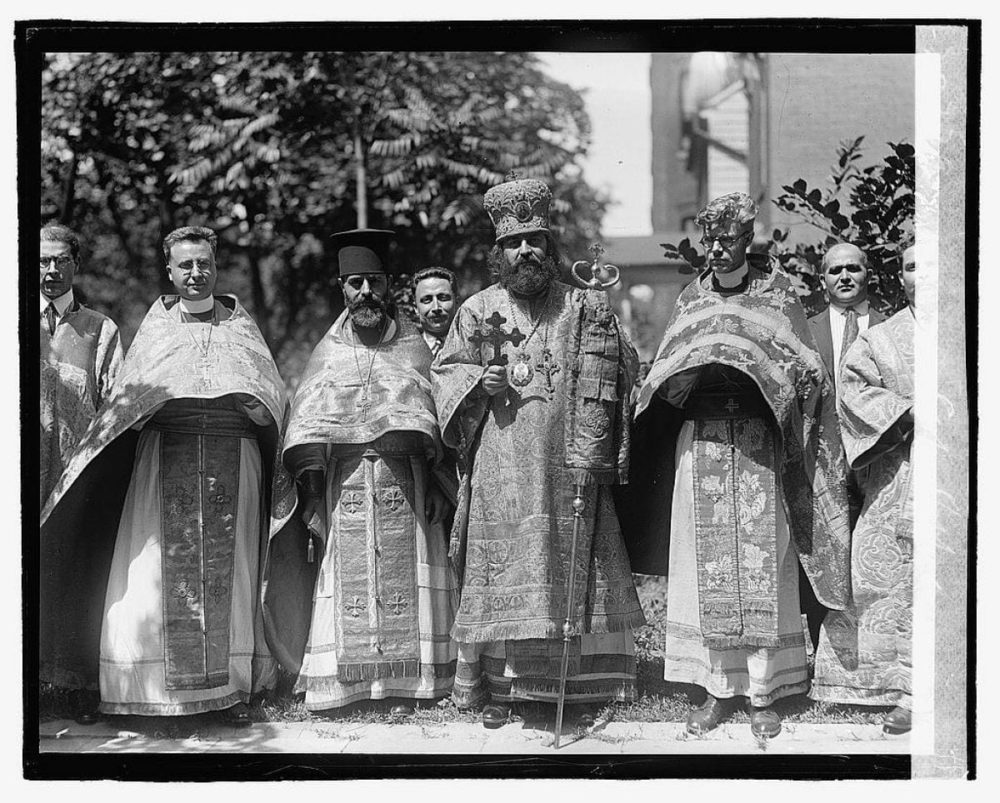
The American Orthodox Catholic Church (AOCC) traces its origins to the early 20th-century development of Orthodox Christianity in North America, particularly through the work of Archbishop Aftimios Ofiesh (Aftimios Ofiesh), a hierarch who served within the canonical Orthodox framework under the Russian Orthodox mission in America.
Archbishop Aftimios was consecrated as a bishop within the jurisdiction of the Russian Orthodox Church during a period when the Russian Church was the primary canonical authority overseeing Orthodox Christianity in North America. His consecration and ministry took place in full sacramental communion with the broader Orthodox world, reflecting the established ecclesiastical order of the time.
According to historical records, including episcopal documentation and succession records, Archbishop Aftimios was entrusted with missionary and administrative responsibilities in the United States during a formative period of Orthodox expansion.
In 1927, within this context, the American Orthodox Catholic Church emerged as part of an effort to establish a stable, locally rooted Orthodox jurisdiction in America. This development was consistent with broader movements within Orthodoxy to adapt ecclesial structures to new geographic and cultural realities while preserving apostolic continuity.
Crucially, the episcopal lineage of the AOCC continued through bishops consecrated by Archbishop Aftimios, whose own consecration was recognized within the canonical Orthodox framework. These subsequent consecrations preserved apostolic succession through valid episcopal transmission, ensuring continuity of sacramental life and ecclesial authority.
Throughout its history, the AOCC has maintained this succession and sacramental continuity. While the structure and visibility of Orthodox jurisdictions in America have evolved over time due to historical and cultural factors, the continuity of episcopal lineage and ecclesial life within the AOCC has remained intact.
Historical documentation further reflects that the Church did not cease in the early 20th century but continued through successive generations of clergy and bishops, preserving its identity as an Orthodox jurisdiction in America.
Today, the American Orthodox Catholic Church understands itself as a continuation of this original foundation, maintaining apostolic succession, sacramental life, and synodal governance consistent with Orthodox ecclesiology.
The American Orthodox Catholic Church has continued through successive generations of bishops and clergy since its establishment in 1927. Its continuity is reflected in the preservation of apostolic succession, sacramental life, and synodal governance, consistent with the ecclesial principles of the Orthodox Church.
Founding Hierarch
Archbishop Aftimios Ofiesh served as a bishop under the Russian Orthodox Church in North America during the early 20th century, at a time when it functioned as the primary canonical authority for Orthodox Christians in the region.
His consecration, ministry, and participation in ecclesiastical life took place within the broader framework of Orthodox communion. Through his leadership, the foundation was laid for the development of an American Orthodox jurisdiction rooted in apostolic succession and canonical tradition.
Apostolic Succession and Ecclesiology
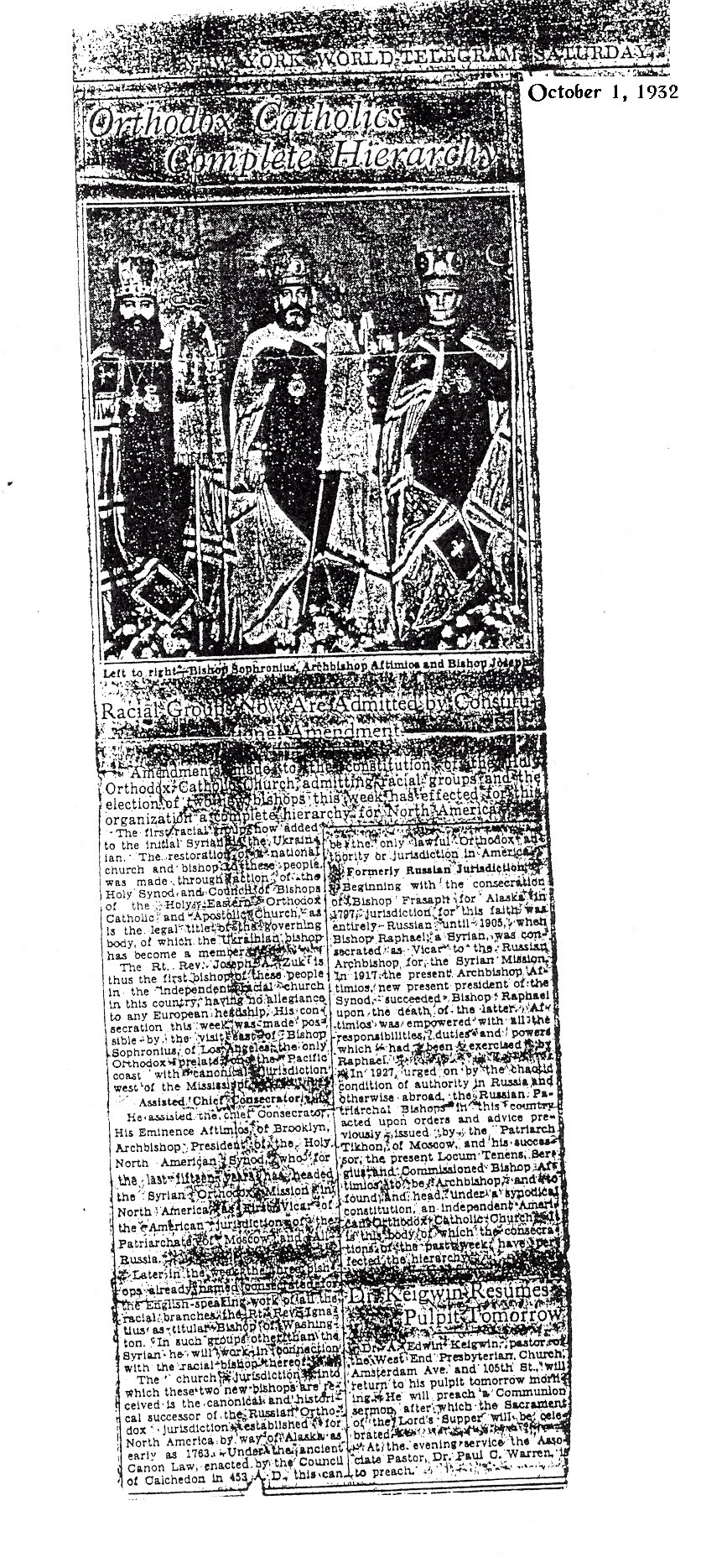
The American Orthodox Catholic Church (AOCC) maintains apostolic succession through valid episcopal lineage consistent with the canonical tradition of the Orthodox Church. This succession is historically rooted in the consecration and ministry of Archbishop Aftimios Ofiesh, whose episcopacy was established within the jurisdiction of the Russian Orthodox Church during its canonical administration in North America.
The apostolic succession preserved within the AOCC proceeds through this lineage and through subsequent bishops consecrated within that same ecclesial framework. This continuity reflects the historic Orthodox understanding that the life of the Church is transmitted through the episcopacy, preserving both sacramental integrity and doctrinal fidelity across generations.
The ecclesiology of the AOCC is grounded in the conciliar and sacramental life of the Orthodox Church. Authority is exercised through the episcopate in synod, reflecting the model of governance established in the early Church and affirmed through the Ecumenical Councils.
The AOCC affirms:
Continuity of apostolic succession within the Orthodox tradition
The authority of Holy Scripture within Holy Tradition
The centrality of the Eucharist and sacramental life
The canonical principles expressed in the Apostolic Canons and Ecumenical Councils
Within this framework, the AOCC understands itself as a continuing Orthodox jurisdiction in America, maintaining the apostolic faith through both lineage and lived ecclesial life.
Structure and Governance
The American Orthodox Catholic Church is governed by a Holy Synod of Bishops, reflecting the conciliar structure of the historic Orthodox Church. This synodal model ensures that authority is exercised collectively, preserving both unity and accountability within the life of the Church.
Hierarchical Structure
Patriarch / Metropolitan: Primate and chief hierarch of the Church
Holy Synod of Bishops: Governing body responsible for doctrine, discipline, and ecclesiastical administration
Archbishops and Bishops: Overseers of provinces and dioceses
Clergy: Priests and deacons serving parishes, missions, and specialized ministries
The Holy Synod actively oversees the doctrinal integrity, sacramental life, and continued development of the Church’s mission, reflecting the conciliar governance model characteristic of Orthodox ecclesiology.
Provincial Organization
The AOCC maintains an organized ecclesiastical presence across the United States through regional provinces, including:
New England Province
Northeastern Province
Southeastern Province
Southern Appalachian Province
Midwest Province
Southwest Province
Northwest Province
Each province operates under episcopal oversight and contributes to the unified governance and mission of the Church.
Specialized Jurisdictions
Diocese of the Armed Forces: Provides pastoral care and sacramental ministry to military personnel and their families
This structured and active governance reflects the AOCC’s identity as a functioning Orthodox jurisdiction in America.
Clergy and Ordination
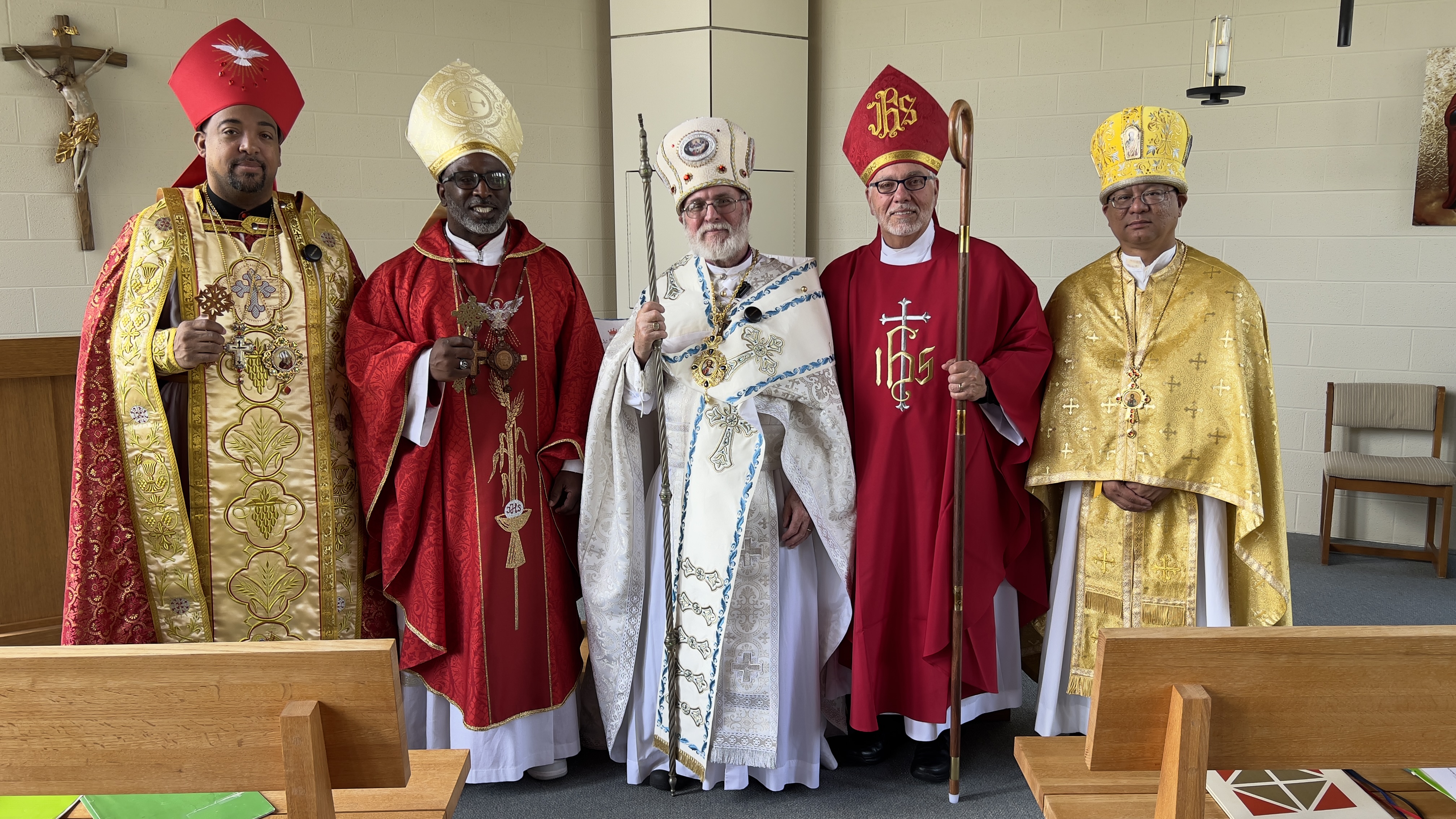
Clergy within the American Orthodox Catholic Church are ordained through apostolic succession according to the liturgical rites and canonical standards of the Orthodox Church. Ordination is understood not as a symbolic act, but as the transmission of ministerial authority and grace within the life of the Church.
The formation of clergy includes theological education, pastoral training, and participation in the liturgical and sacramental life of the Church. This formation is supported through structured programs of study and mentorship, including those provided by the American Orthodox Theological Seminary.
Clergy of the AOCC serve in active ministerial roles, including parish leadership, sacramental administration, chaplaincy, teaching, and missionary work. This active ministry reflects the lived reality of the Church’s mission and the continuity of its pastoral and sacramental life.
Ordination within the AOCC is thus both canonical and functional, integrating apostolic succession with ongoing service in the life of the Church.
Liturgical Life
The American Orthodox Catholic Church preserves the liturgical tradition of the Orthodox Church through the regular celebration of:
The Divine Liturgy of St. John Chrysostom
The Divine Liturgy of St. Basil the Great
The Divine Liturgy of St. Tikhon
The Divine Liturgy of St. James
The Divine Liturgy of St. Gregory
Authorized Western Rite liturgical expressions
The Eucharistic life of the Church remains central, accompanied by the full cycle of Orthodox sacraments and services.
Mission and Identity
The American Orthodox Catholic Church identifies as an Orthodox Church in America, committed to preserving the fullness of the apostolic faith while engaging the pastoral realities of contemporary society.
Rooted in apostolic succession and the canonical tradition of the Orthodox Church, the AOCC represents a continuing expression of Orthodox Christianity within the American context. Its mission reflects both continuity and presence, maintaining the historic faith while serving the spiritual needs of diverse communities.
The Church’s mission includes:
Establishing a stable and enduring Orthodox jurisdiction in America
Providing sacramental and pastoral care across varied cultural and regional contexts
Preserving the unity of the Orthodox faith within the framework of Holy Tradition
Supporting the formation of clergy and laity through theological education and spiritual life
In this way, the AOCC continues its original purpose as an American Orthodox jurisdiction, rooted in apostolic tradition while actively engaged in the life and mission of the Church today.
Theological Education
The AOCC supports theological education and clergy formation through the American Orthodox Theological Seminary.
The seminary provides structured academic and pastoral training, offering:
Certificate in Orthodox Studies
Bachelor of Theology (B.Th.)
Master of Divinity (M.Div.)
Doctor of Ministry (D.Min.)
Doctor of Divinity (D.D.)
These programs are designed to support the continued development of clergy within the Orthodox tradition.
Military and Chaplaincy Ministry
The American Orthodox Catholic Church maintains a commitment to pastoral care within the armed forces through its Diocese of the Armed Forces.
This ministry provides:
Sacramental care for military personnel
Pastoral support for service members and their families
Ongoing clergy presence within military contexts
Publications and Public Engagement
The AOCC engages in theological and pastoral communication through its official publication, American Orthodox Voice.
This platform serves as a resource for teaching, reflection, and engagement within the broader Orthodox and Christian community.
See Also
Eastern Orthodox Church
Apostolic Succession
Orthodox Ecclesiology
Nicene Creed

